



How to Choose the Right Lip Gloss Tube Applicator for Different Lip Formulas?

Somos uma fábrica de embalagens cosméticas personalizadas que oferece serviço completo e temos mais de 20 anos de vasta experiência na personalização de tubos cosméticos, tubos squeeze, tubos ABL, tubos PBL, tubos com bomba airless, tubos para gloss labial e tubos para cuidados com a pele. PCR (reciclado pós-consumo) ) Tubo , etc.
Your lip gloss tube applicator is the delivery system. It decides how a formula picks up, deposits, and feels on the lips. Selection must start from the application result you want, not from how the brush looks.
The same gloss performs differently with each applicator type, wiper, and stem. A metal rollerball lip serum tube, a flocking applicator lip gloss tube, and a silicone tip lipgloss tube each change pickup and deposit. So begin with the formula and its viscosity.
How do you match the two? Define the formula and goal, compare applicator types, tune the wiper and stem, then validate with filled samples.
Key Takeaways
- Start with your lip gloss formula and the result you want on the lips.
- Compare applicator types to find the best match for your formula.
- Use the wiper to control how much gloss comes out of the tube.
- Check stem length and tube shape to reach all the product.
- Test filled samples to confirm the applicator works perfectly.
Define the Formula and Application Goal
Start with the result you want on the lips. A brush that looks elegant in a photo tells you nothing about pickup, dose, or wear. Work backward from the application experience instead: how much gloss should one dip deliver, how evenly should it spread, and how should it feel during the swipe? Answer those questions first, and the applicator shortlist narrows quickly.
Read Viscosity and Pigment Load
Viscosity is the first filter. A lightweight lip oil flows fast and drains from a wand quickly. A thick, cushiony gloss clings to the stem and releases slowly. Highly pigmented liquid lipsticks sit at the heavy end, and they demand an applicator that loads and releases color consistently. As apackaginggroup.com notes, lightweight lip oils may perform differently from thicker glosses or highly pigmented liquid lipsticks, so you should evaluate flexibility, pickup, wiping performance, closure fit, and formula compatibility together.
Pigment load adds a second variable. Sheer tints tolerate a wide range of tips. High-pigment formulas need controlled release, or the first swipe floods the lip line. Pearlescent and glitter particles bring their own constraint. Kaiya Cosmetics points out that particle size, shape, and orientation create the visible effect, and the screen, filling nozzle, wiper, and applicator must all accommodate those particles. Otherwise, a beautiful lab sample may not fill or apply evenly in production.
Viscosity also shifts with temperature, oils, waxes, and pigment loading, according to xinflypackaging.com. Approve the final orifice and applicator with the real gloss formula, not water or a generic test liquid.
|
Parameter |
What to compare |
Why it matters |
|---|---|---|
|
Wiper |
Material, opening and retention |
It controls formula removal from the wand. |
|
Wand and applicator |
Length, flexibility, shape and flocking |
Geometry determines reach and application. |
|
Formula pickup |
Viscosity, load and payoff |
The same applicator performs differently across formulas. |
Set the Target Deposit and Finish
Now define the deposit. A sheer everyday tint needs a thin, even film. A plumping treatment needs bulk in a single dip. A high-shine glaze needs a smooth, glass-like layer with no streaking. Each goal points to a different tip geometry and a different tube material.
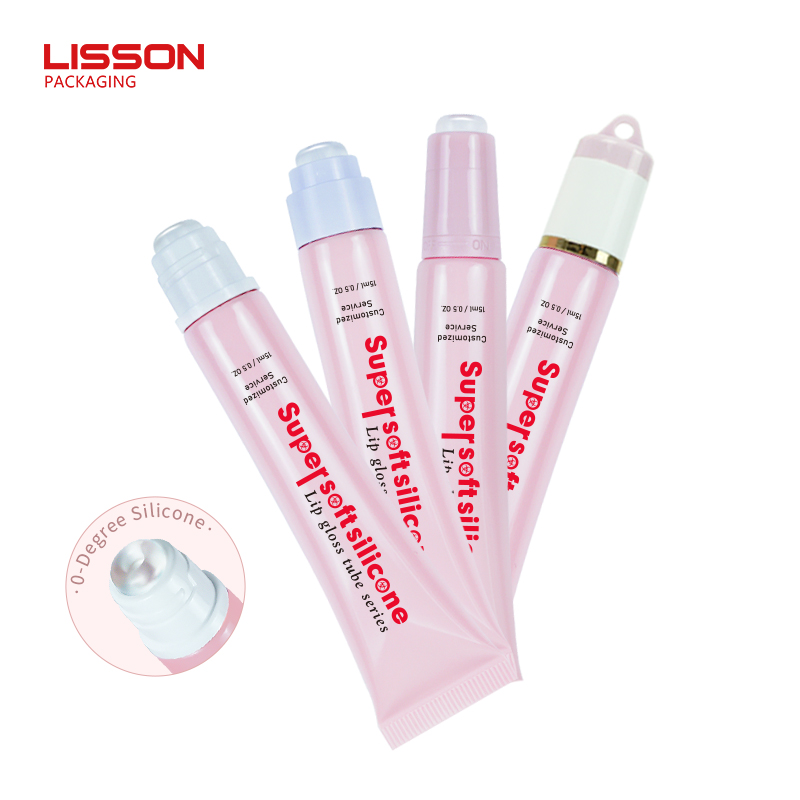
Finish drives material choice as much as shape. Dinshine Packaging notes that PETG is often chosen for a highly transparent, glass-like look that shows off the formula, while heavy-wall acrylic delivers a luxury glass effect. A metal rollerball lip serum tube suits lip oils and cooling treatments, and its metallic housing reinforces a premium positioning. A flocking applicator lip gloss tube gives a soft, cushion-like feel and holds bulk well for nourishing formulas. A silicone tip lipgloss tube does not absorb the formula, which makes it a strong fit for treatments and thicker products.
The best lip gloss tube for a high-shine formula is not defined by one material, one applicator or one package style. Successful products are created when the formula, the applicator and the packaging are developed to work together.
That quote from Dinshine Packaging captures the logic of this whole step. Match the applicator to the formula's viscosity, because different formulas flow and deposit differently. Then confirm the tube material supports the finish you promise on the label.
Compare Lip Gloss Tube Applicator Types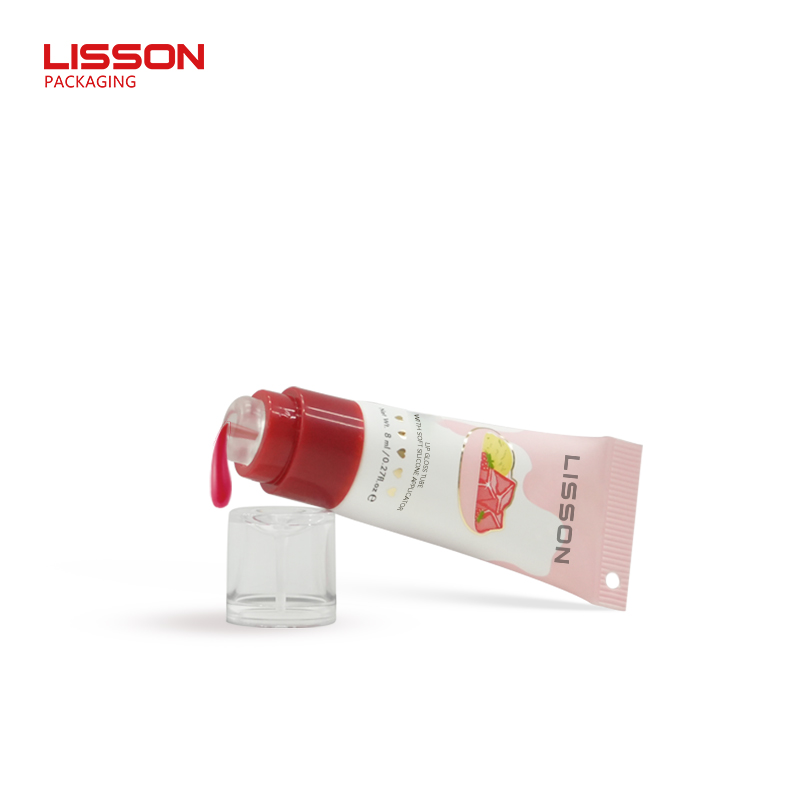
Applicator families differ in pickup, contact feel, and control. Compare them against your formula and your target deposit, not against each other in the abstract.
Doe-Foot, Brush, and Specialty Tips
The doe-foot is the familiar soft, sponge-tipped wand. It picks up product evenly and suits controlled application. Several doe-foot types cover different viscosity ranges, so shape matters as much as the family. Muzhpack describes the options clearly: a slim or pointed doe-foot gives accurate placement around the lip edge, a classic oval or slanted doe-foot covers more area while remaining easy to guide, and a wider paddle or jumbo applicator places more of the tip against the lips for broader coverage.
|
Applicator |
Best for |
Control notes |
|---|---|---|
|
Slim or pointed doe-foot |
Accurate placement around the lip edge |
Smaller contact area gives more control |
|
Classic oval or slanted doe-foot |
Many standard lip gloss projects |
Covers more area and stays easy to guide |
|
Wider paddle or jumbo |
Broader coverage, more formula on the tip |
Places more of the tip against the lips |
|
Brush |
Brush-like spreading or detailed work |
Fine bristles give maximum precision for shaping and lining |
|
Smooth molded tip |
A non-flocked application surface |
Suits brands that want a smooth contact feel |
|
Sponge, roller, or other direct format |
Changing the dispensing method itself |
Alters dispensing, not just the wand tip shape |
Brush-tip applicators give you the most control for precise lip lines and detailed work, according to Somewang. A flat brush suits thin gloss formulas and lip oils, while a paintbrush-style tip supports layered, editorial looks. Lisson Packaging also lists a click-pen brush for treatments and travel, a precision nozzle for high-viscosity gloss liners, and a cushion sponge for sheer, diffused finishes.
Flocked, Silicone, Metal, and Roller-Ball
Flocked tips carry fine fibers on a molded core. The fiber surface holds formula and releases it with soft contact. Performance varies with tip geometry, flock length, and density. A flocking applicator lip gloss tube is a common choice for richer glosses, and a filled test should confirm even fiber coverage and release without patchiness.
Silicone offers a smooth molded surface instead of fibers. Formula sits on the outside or in designed grooves and spreads directly onto the lips. A silicone tip lipgloss tube does not absorb product the way foam does, so less formula is wasted, and it is easy to clean. Sampling should confirm comfortable flex and that the wiper does not strip too much product.
Metal brings a cool contact sensation and a tool-like appearance. A metal rollerball lip serum tube fits lip oils and treatment-led concepts, where the ball rotates in its housing and spreads formula without a removable wand. Check smooth rotation, even pickup, and residue around the housing.
Packaging format shapes the choice too. Dip-in tubes treat the wiper, stem, and applicator as one system. Built-in sponge tips and squeeze tubes skip the removable wand, so formula flow, outlet size, and cap protection become the main checks. Sunronpack maps wand containers to low-to-medium viscosity formulas and squeeze tubes to medium-to-high viscosity ones.
Use the Wiper to Control Dose
The wiper is the insert inside the bottle neck. It works with the applicator shape to set how much formula leaves the tube and how evenly that formula lands on your lips. A suitable applicator can still perform poorly when the wiper does not match it, as muzhpack.com notes. Review the two parts together before you change the whole bottle.
Wiper Orifice and Viscosity
Orifice size must track formula viscosity. A fluid botanical oil drains readily off the doe-foot and needs tighter wiping. A viscous, polymer-rich gloss clings to the stem and needs a more open passage. Veqapkg.com reports that low-surface-tension oils require tighter radial constriction, in the range of 0.15–0.25 mm interference, to prevent wand dripping. A flange molded for high-viscosity gloss will flood when filled with light lip oil.
|
Wiper Condition |
Effect on Pickup and Application |
|---|---|
|
Too tight |
Removes too much formula, so pickup falls short and users re-dip; strong resistance can strip a large applicator unevenly. |
|
Too loose |
Leaves excess formula on the stem and tip, causing dripping, inconsistent dose, and buildup around the neck. |
Balancing Pickup and Even Application
Aim for one withdrawal that delivers a practical dose. Too much product lengthens setting time, creates uneven coverage, and raises early transfer. Too little product causes streaking, patchy color, and extra passes. Veqapkg.com suggests tuning extraction drag between 0.8 N and 1.5 N; excessive friction stretches a flexible wand and spatters formula at exit.
Check the wiper against your actual stem, tip, and formula. A flocking applicator lip gloss tube, a silicone tip lipgloss tube, and a metal rollerball lip serum tube each pass through the neck differently. Test withdrawal smoothness, stem cleanliness, re-dip need, and return into the bottle on filled samples. If the dose looks wrong, adjust the wiper and Lip Gloss Tube Applicator pairing first.
Check Stem Length and Tube Geometry
Stem Reach and Fill Volume
Stem length decides how deep the wand reaches into the bottle. A short stem leaves formula stranded below the tip, and that residue never reaches the lips. A long stem reaches the bottom of the fill, so the user draws product through most of the tube's life. Match stem length to fill volume and tube height, then confirm the tip still clears the base without scraping.
Flexibility and reach work together. A flexible stem bends to follow the lip curve and gives you control at the edges. A stiff stem suits precise placement but feels less forgiving. Check end-of-life waste on filled samples: weigh the formula left in the bottle after normal use. A flocking applicator lip gloss tube, a silicone tip lipgloss tube, and a metal rollerball lip serum tube each leave different residue, so test the exact Lip Gloss Tube Applicator you plan to specify.
Cap Seal and Squeeze-Tube Parameters
The cap must seal tightly. A loose closure lets the gloss dry out, thickens the formula at the neck, and shortens shelf life. Test closure fit after repeated open-and-close cycles.
Squeeze tubes change the checklist. You evaluate the direct-contact tip, outlet size, capacity, tube diameter, cap, material, and artwork area as one system. Somewang lists round PE squeeze tubes at D19mm and D16mm with custom capacity, plus a 15ML tube with a plastic or metal applicator and a 10g PP ball-shape tube. The PKG Co offers dropper applicator tubes with sponge or brush at D19mm and D16mm, a twist-off applicator tube at D19.00mm, and a long nozzle tube from 1ml to 5ml. Customization covers diameter, length, material, cap direction, applicator, color, printing, and finishes.
Validate With Filled-Sample Testing
A Practical Evaluation Checklist
A digital rendering cannot confirm hand feel, squeeze recovery, cap operation, seal performance, or formula dispensing. Hucci Pack makes this point directly: you need a physical sample filled with the real formula or a representative test formula. That sample lets you judge squeeze force, recovery, cap operation, dispensing control, surface feel, print quality, sealing, and handling.
Build your evaluation around six checks. Confirm pickup: does one withdrawal carry a practical dose? Confirm dose consistency across repeated dips. Confirm coverage and evenness on the lip, with no streaking or patchiness. Confirm the cap seals tightly after repeated open-and-close cycles. Confirm end-of-life waste by weighing the formula left in the tube after normal use. Run these checks on the exact Lip Gloss Tube Applicator you plan to specify, because a metal rollerball lip serum tube, a flocking applicator lip gloss tube, and a silicone tip lipgloss tube each behave differently at the neck and at the lip.
Hucci Pack also flags two common mistakes. Selecting the cap too late changes user experience, tube balance, dispensing behavior, and visual proportions. Skipping physical samples leaves hand feel and seal performance unconfirmed.
Supplier Collaboration on Final Selection
Bring your supplier into the evaluation early. Hucci Pack suggests asking which closure or applicator suits your product viscosity and use area, how the structure affects squeeze feel and dispensing control, and whether the supplier can provide a digital mockup plus a physical sample before production. Ask which compatibility, seal, leakage, and transportation checks they recommend.
Lisson Packaging supports filled-sample evaluation, specification review, and final applicator selection before production tooling. Share your formula, target deposit, and fill volume, then approve a written specification and a reference sample together. That record protects both sides once tooling begins.
Match in one order: formula characteristics, application goal, applicator type, then wiper and stem tuning. Finish with filled-sample validation. No single Lip Gloss Tube Applicator wins for every formula. The right one fits your specific gloss and the experience you promise.
Request filled samples from your supplier before you commit to production tooling. Lisson Packaging supports sampling and specification review, so you can compare a metal rollerball lip serum tube, a flocking applicator lip gloss tube, and a silicone tip lipgloss tube against your real formula.
As your lip line expands, revisit this logic for each new formula. A second shade or finish may need a different tip, wiper, and stem combination.
FAQ
Which applicator suits a thin lip oil?
A thin oil drains off the wand quickly. Pair it with a tighter wiper and a tip that holds formula, such as a flocking applicator lip gloss tube. Confirm the dose on a filled sample, because the same tip behaves differently across oil viscosities.
Can one applicator work across several gloss formulas?
Rarely well. A tip tuned for a thick gloss floods when you fill it with a light oil. If you plan a shade range, test each formula with its own wiper and stem. A silicone tip lipgloss tube may cover several treatments, but verify pickup on each one.
How do I test whether the wiper dose is right?
Fill a sample and dip repeatedly. One withdrawal should carry a practical dose with no dripping and no re-dip. Check that the stem returns clean and the neck stays free of buildup. Adjust the wiper before you change the applicator.
When should I choose a rollerball instead of a wand?
Choose a metal rollerball lip serum tube for lip oils and cooling treatments. The ball spreads formula without a removable wand, so check smooth rotation and even pickup. Wands give more placement control at the lip edge.
How much formula should remain in the tube at end of life?
Weigh the residue after normal use on a filled sample. A short stem strands formula below the tip, and that product never reaches the lips. Match stem length to fill volume, then compare residue across your candidate tips before you approve tooling.